Contact us for a free quote & expert advice! 📞 1300 398 221

Construction communications

Construction Two Way Radios

Construction sites need communications that can be relied on, rain, hail or shine – not just for safety, but to ensure projects run on time and to budget. Digicom designs and installs scalable, reliable and durable two way radio systems that work efficiently in weather extremes, minimising delays and improving worker safety. Whether it’s Waterproof Radios, Emergency Radios or Intrinsically Safe Radios we tailor a solution for you. Is your site busy and loud? Ask about our noise cancelling solutions too.
Commercial Grade

Two Way Radios Built for Australian Construction Sites

Walk onto any active construction site and the communication challenges are obvious. Heavy plant generates constant background noise. Steel frames and reinforced concrete kill UHF signal between floors. Trades are spread across multiple levels and zones. And the site layout changes every few weeks as the build progresses.

Consumer-grade walkie talkies were not built for any of that. Digicom Wireless supplies commercial-grade two-way radio systems to construction sites across Australia. Every radio we supply is ACMA type-approved, professionally programmed to your frequency plan, and built to IP67 or IP68 and MIL-STD-810 ratings that actually survive a working site.

Compliance matters

WHS and ACMA Obligations On Site

Construction sites in Australia operate under Work Health and Safety legislation that places specific obligations on how radio communications are managed. Using radios that are not type-approved, operating on unlicensed frequencies, or using digital radios on UHF CB channels are all breaches that can attract significant ACMA penalties.

As an ACMA-accredited provider, Digicom Wireless ensures every system we supply is compliant from day one. We manage the frequency licensing process on your behalf, including ACMA applications, frequency coordination, and radio programming to match your site rules and WHS procedures.

Signal Loss in Steel and Concrete Structures

Multi-storey construction kills UHF signal between floors. A correctly positioned repeater resolves most coverage problems on mid-rise projects. For larger high-rise developments, a distributed antenna system or in-building cellular solution may be needed. Digicom Wireless designs and supplies both.

Crane Operators Must Use Licensed Frequencies

Under Australian WHS regulations, crane operators cannot use UHF CB channels. Communication between operators, riggers, and dogmen must run on ACMA-assigned private frequencies. Digicom manages the frequency application, programming, and compliance for tower, mobile, and crawler crane operations.

Multi-Channel for Trades and Subcontractors

Principal contractors, subcontractors, crane operators, site management, and security all need separate channels with the ability to coordinate across them. Digicom programs dedicated talk groups per trade, a site-wide all-call channel, a supervisor channel, and crane-specific private frequencies into your fleet before it arrives on site.

Lone Worker and Man-Down Alerting for Site Safety

Workers in confined spaces, working at height, or in remote parts of a large site represent a lone worker risk. Man-down alerting detects when a radio has been stationary or angled outside normal parameters for a set period and automatically triggers an alert to a supervisor or control point. Lone worker timers prompt the user to confirm they are safe at regular intervals.

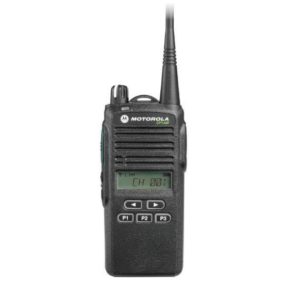
These features are standard on Motorola MOTOTRBO mid-range and above and are increasingly required by WHS officers on large commercial projects. The MOTOTRBO R7 is the benchmark for high-demand construction sites. It is IP68 rated, carries dual-microphone noise suppression for heavy plant environments, supports Bluetooth for wireless headsets, and has GPS tracking built in. It runs on DMR digital, which delivers clearer audio and greater channel capacity than analogue on busy sites. As a Motorola Solutions Platinum Channel Partner, Digicom Wireless supplies the full MOTOTRBO range and configures all safety features to suit your site rules and WHS procedures.

  • Automatic alert when radio is stationary or tilted
  • Lone worker timer with regular safety check-ins
  • GPS tracking so supervision knows where every worker is
  • Emergency alert button with priority channel override
  • Dual-microphone noise suppression for heavy plant environments
  • IP67/IP68 rated housings for dust, water, and impact
Enquire for My Site

Who We Supply on Construction Sites

Construction radio requirements vary by role, site size, and project phase. Here is how we approach the most common ones.

Site Managers and Project Managers

Multi-channel radios with supervisor access, all-call capability, and GPS tracking. TRBOnet or Hytera Smart Dispatch integration available for sites where a control room needs full fleet visibility.

Crane Operators, Riggers and Dogmen

ACMA-licensed private frequency systems compliant with Australian WHS regulations. Digicom manages the frequency application and programs the radios for tower, mobile, and crawler crane operations.

Subcontractors

Dedicated talk groups per trade, pre-programmed and ready on arrival. Radio hire is available for subcontractors who need communication for a specific phase of work without a capital purchase.

Security and Access Control

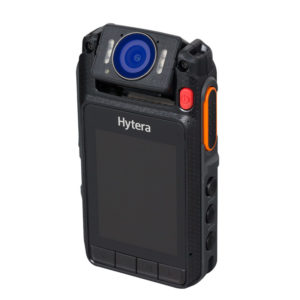
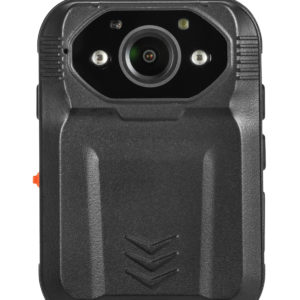
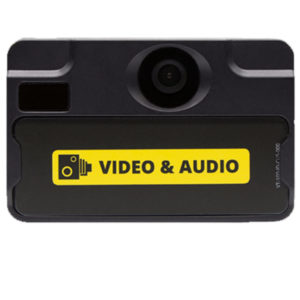
Digital encrypted communications for site security teams with emergency alerting, lone worker features, and optional body worn camera integration for high-risk or high-value sites.

Traffic Controllers

High-audio rugged portables suited to outdoor road-adjacent environments with traffic and plant noise. IP67 rated with long battery life to cover full shift rotations without charging.

Radio Hire for Fixed-Term Projects

Not every project justifies a full radio purchase. Digicom's hire fleet is commercial-grade, pre-programmed to your channel plan, and can be turned around quickly when timelines are tight.

Multi-Site and Large Infrastructure Projects

For construction companies running multiple active sites, Motorola WAVE PTX delivers push-to-talk over cellular so site managers can coordinate across locations without switching platforms. WAVE PTX users can talk directly to conventional radio users on the same system.

Sort communications before your project kicks off, not after the crane is up.

Talk to us early. We are based in Sydney and work with construction projects across Australia. We will design a channel plan, handle your ACMA licensing, and have your fleet programmed and ready before site establishment.

Construction Two Way Radio Product Recommendations

Product Enquiry

Please fill out the form below, and a Digicom team member will be in touch shortly.

Buying options*